The Secret Art of Seasoning: Salt, Fat, and Acid
A dish rarely fails due to complex technique. It almost always fails because of a fundamental imbalance in flavors. Minimalist cooking rejects the superfluous and demands absolute precision.
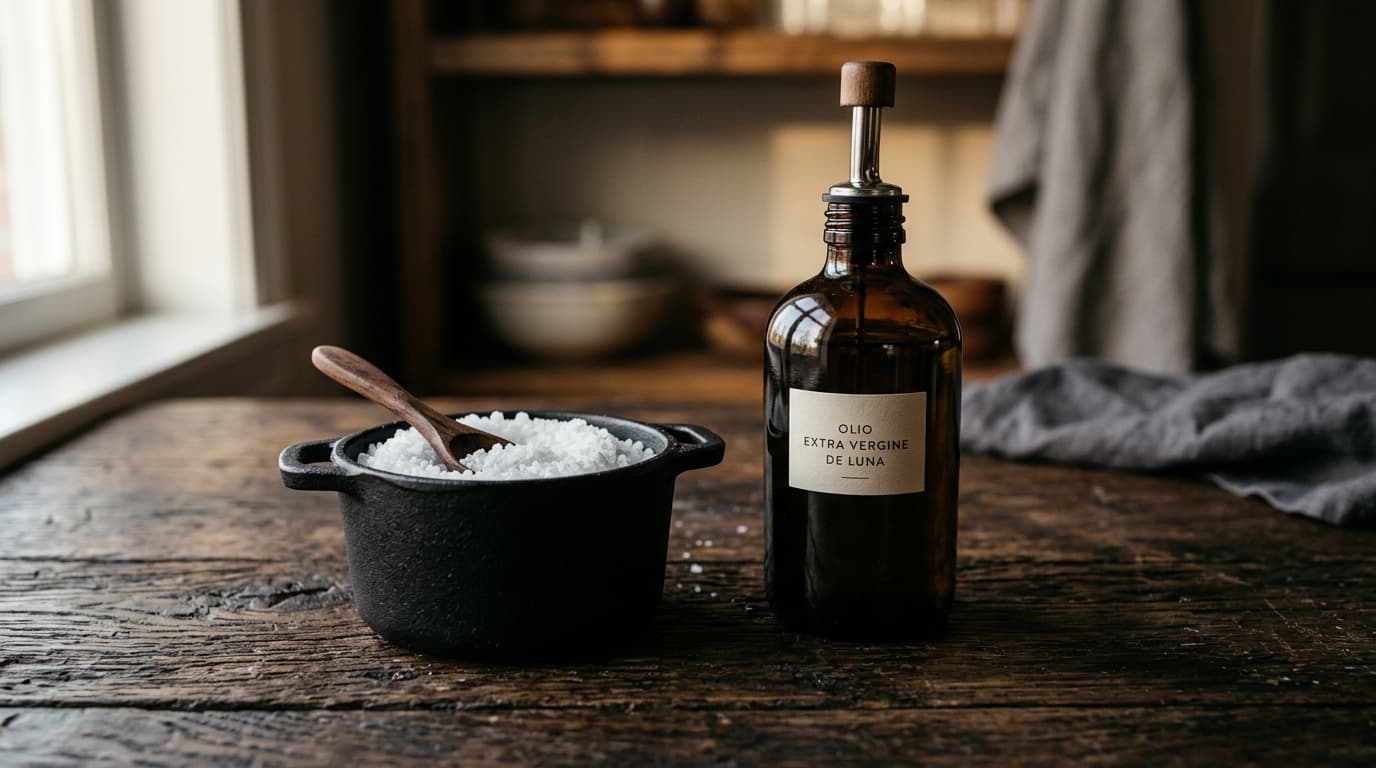
Salt: The Molecular Revealer
Salt does not merely salt; it amplifies. Sodium ions suppress bitterness while releasing locked aromatic compounds. Salting at the right moment changes everything. Early salting penetrates deeply; late salting leaves flavors on the surface.
Fat: The Sensory Vehicle
Fat is the physical medium of taste. Flavor molecules are largely fat-soluble, dissolving in lipids and coating the palate for a sustained finish. Whether raw olive oil or browned butter, fat provides structure and softens the bite of salt or acid.
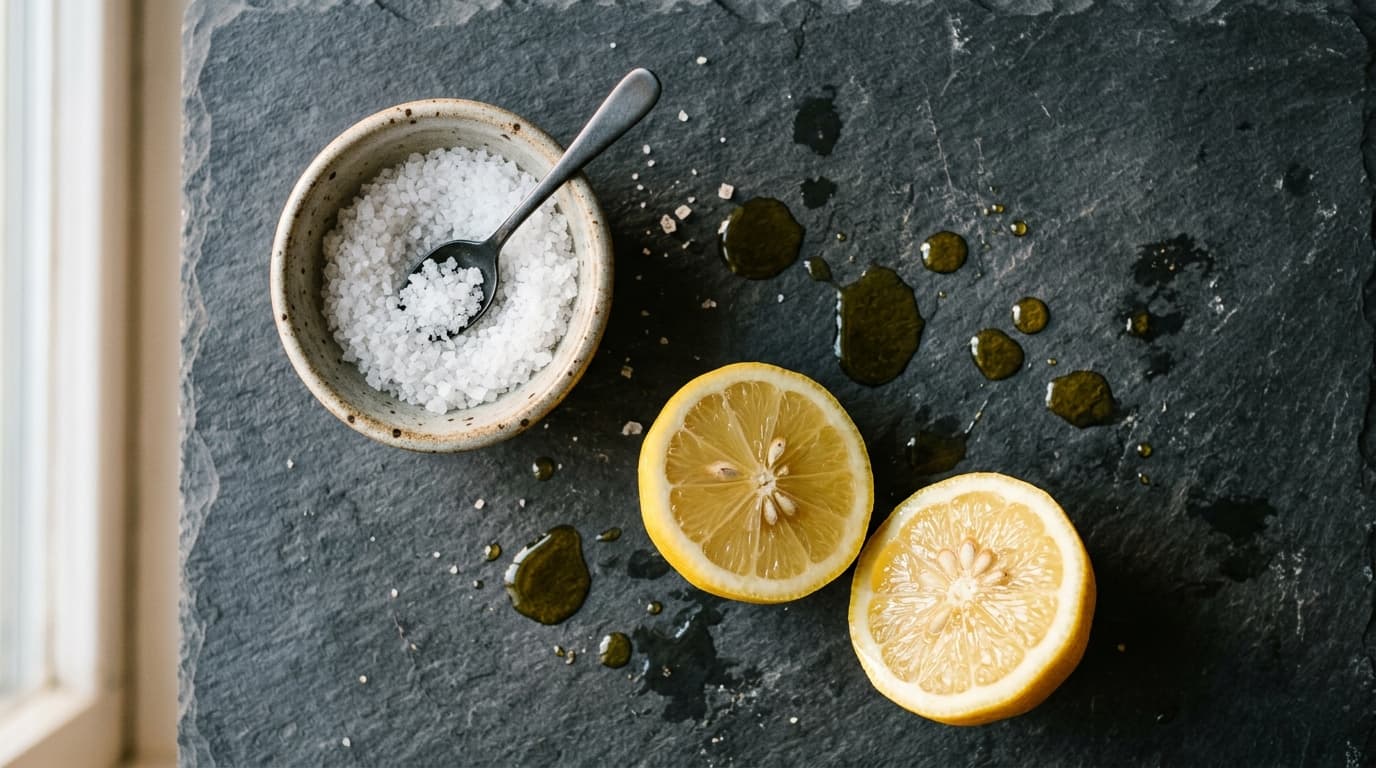
Acid: The Culinary Scalpel
Acid is the missing element in most home cooking. A squeeze of lemon, a splash of vinegar, or a dash of verjus acts like a spotlight. Acid brightens heavy dishes, stimulates salivation, and cuts through excessive richness.
Taste continuously. Adjust in successive micro-doses until the dish vibrates on the palate without any single pillar overpowering the others.