The only 5 essential utensils
The only 5 essential utensils for a minimalist kitchen
Clutter kills creativity. Crowding your drawers with single-use gadgets slows down your gestures and saturates the mind. Choosing a clean kitchen means rediscovering the pleasure of preparation by focusing on the right gesture and the quality of the ingredients.
To achieve this simplicity in cooking, there is no need for complex cookware sets. Only a few essential utensils are enough to cover all cooking and cutting techniques. Here are the only five objects you really need to prepare everything.
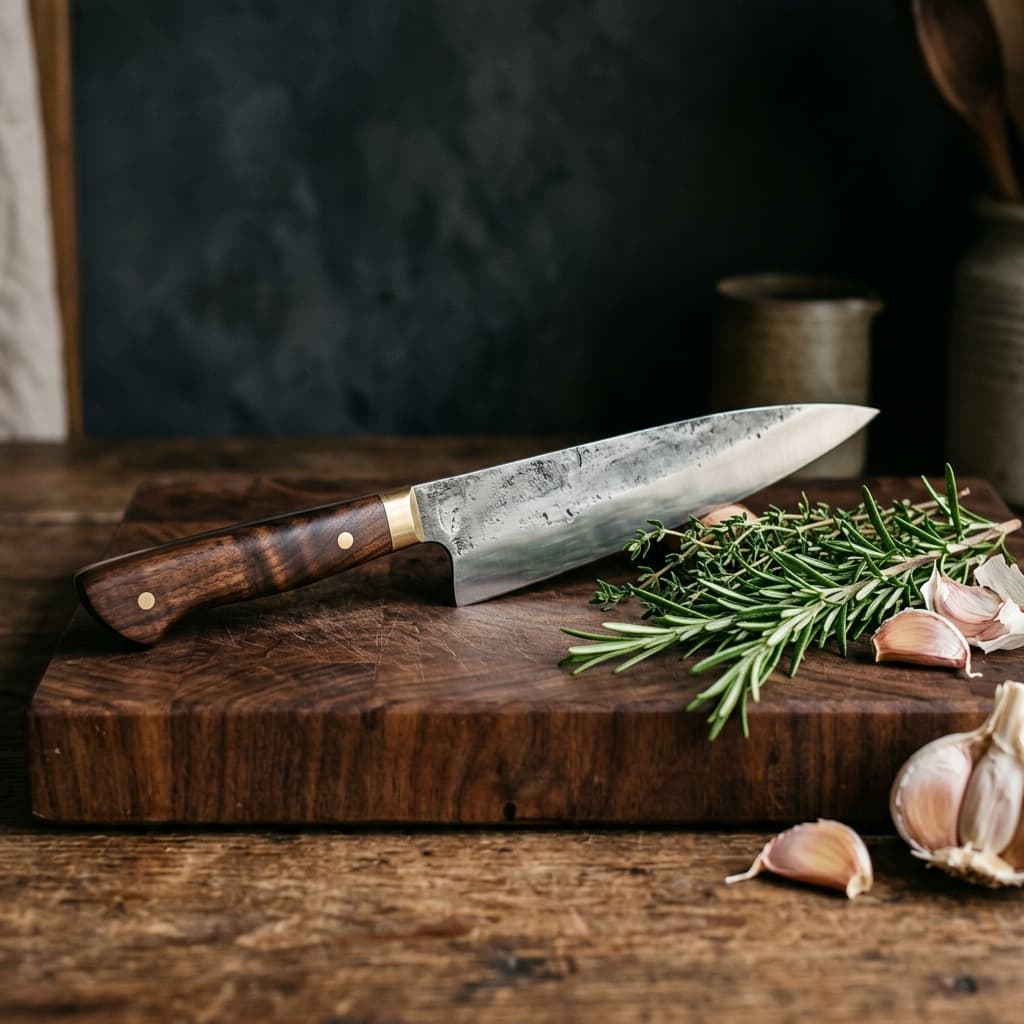
The chef's knife
It is the natural extension of your hand. An 8-inch forged chef's knife replaces paring knives, bread knives, or cleavers by itself. Its balanced weight does the work for you: it slices dense vegetables, minces fine herbs, and trims proteins with surgical precision. Choose high-quality steel that retains its edge over time.
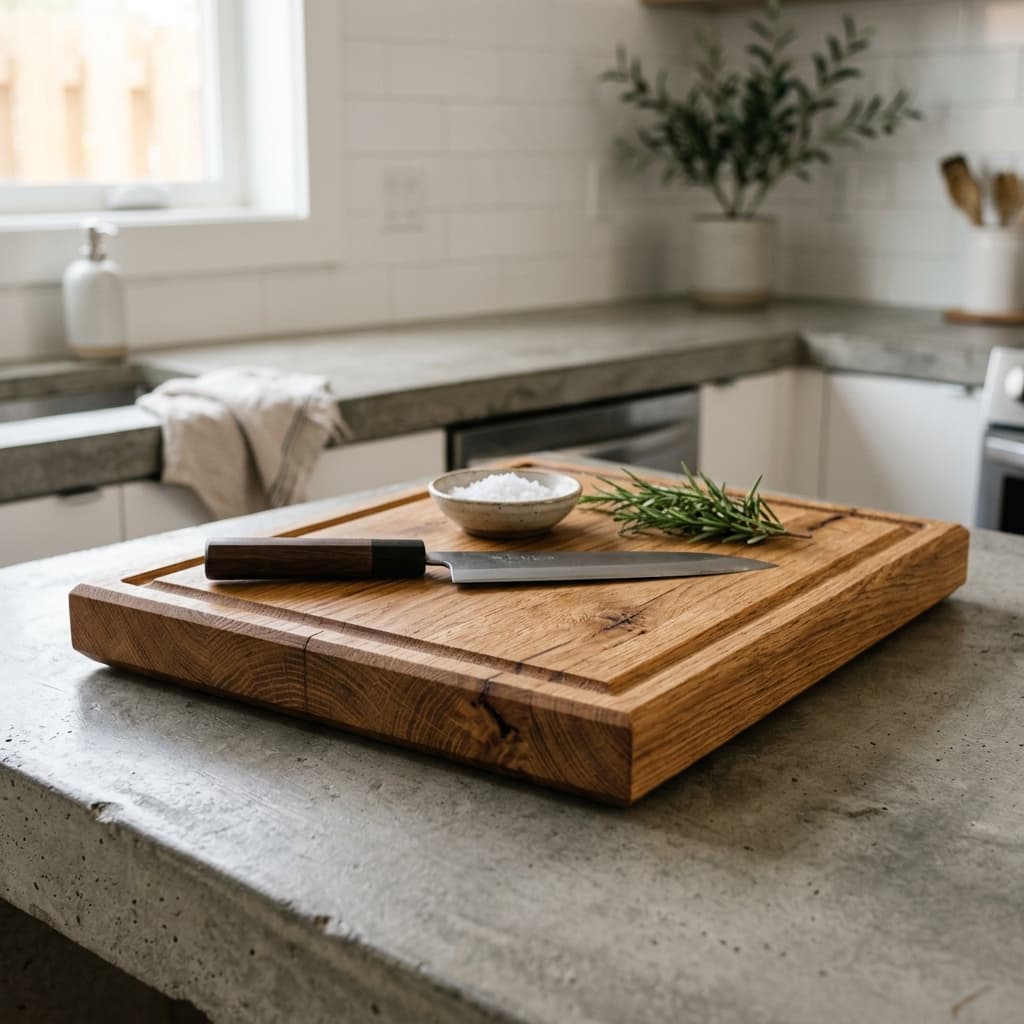
The solid wood cutting board
It protects your knife's edge and provides a stable, safe work surface. Forget plastic, which retains micro-plastics and bacteria. A thick oak or walnut board is indestructible if washed by hand and oiled regularly. It serves as your main cutting station, but also as an elegant serving platter.
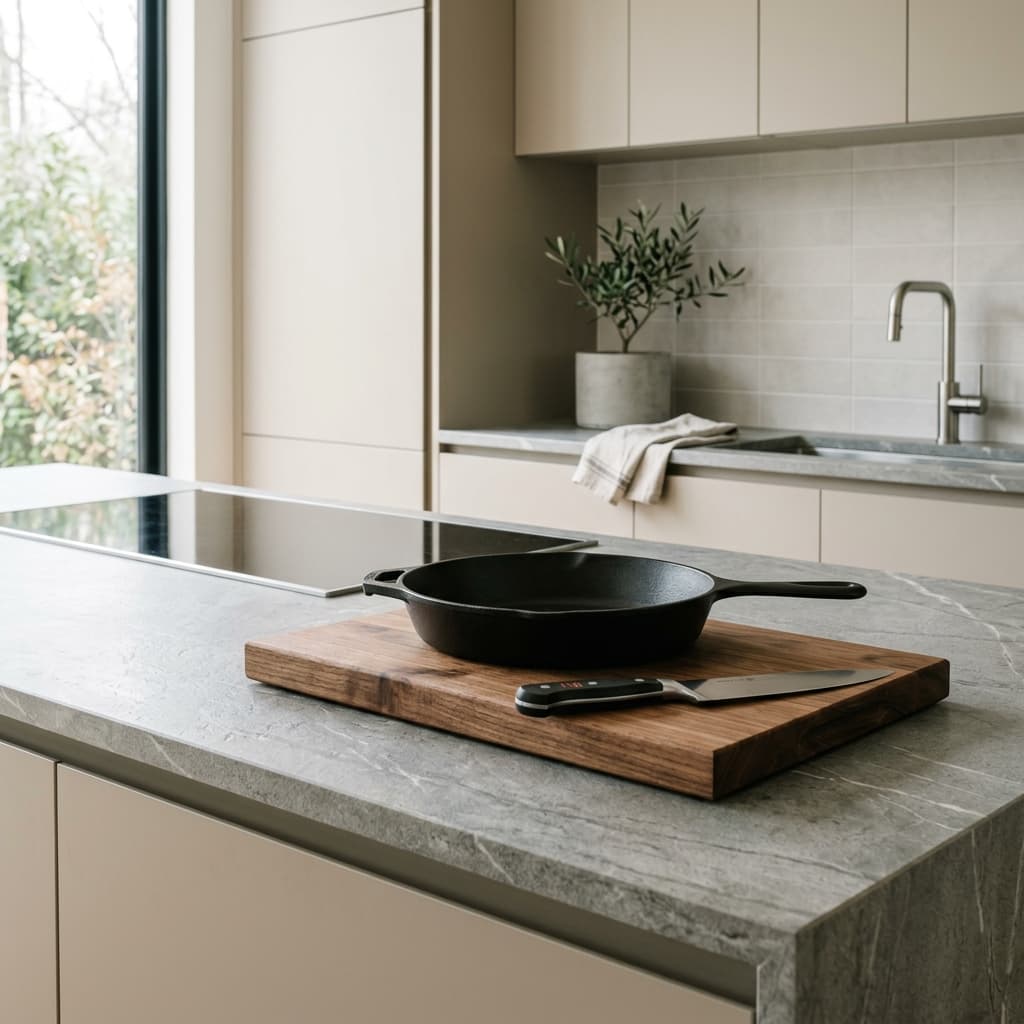
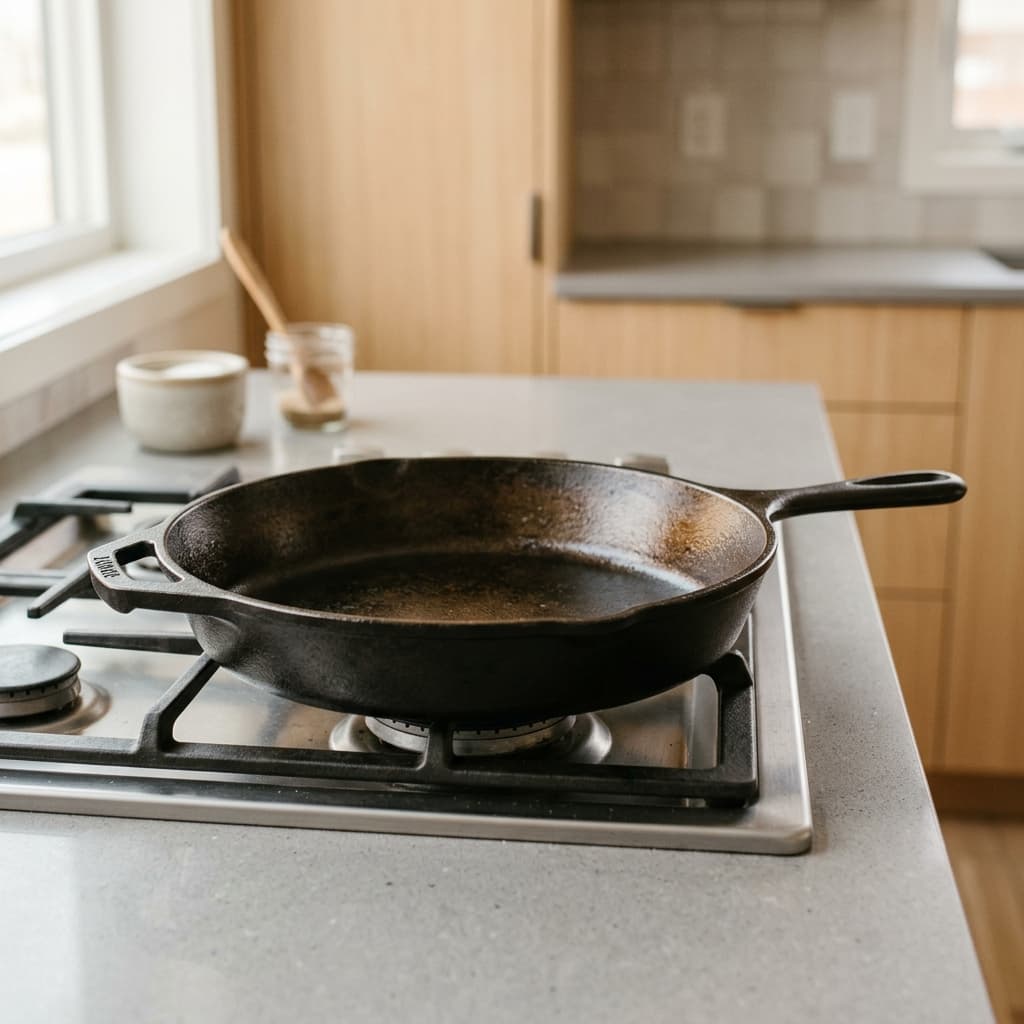
The cast iron skillet
The ultimate material for conducting and retaining heat. A raw 10 or 12-inch cast iron skillet sears meats at high temperature, browns seasonal vegetables, and goes straight from the stovetop to the oven. Durable over generations, its surface develops a natural non-stick coating (seasoning) with use.
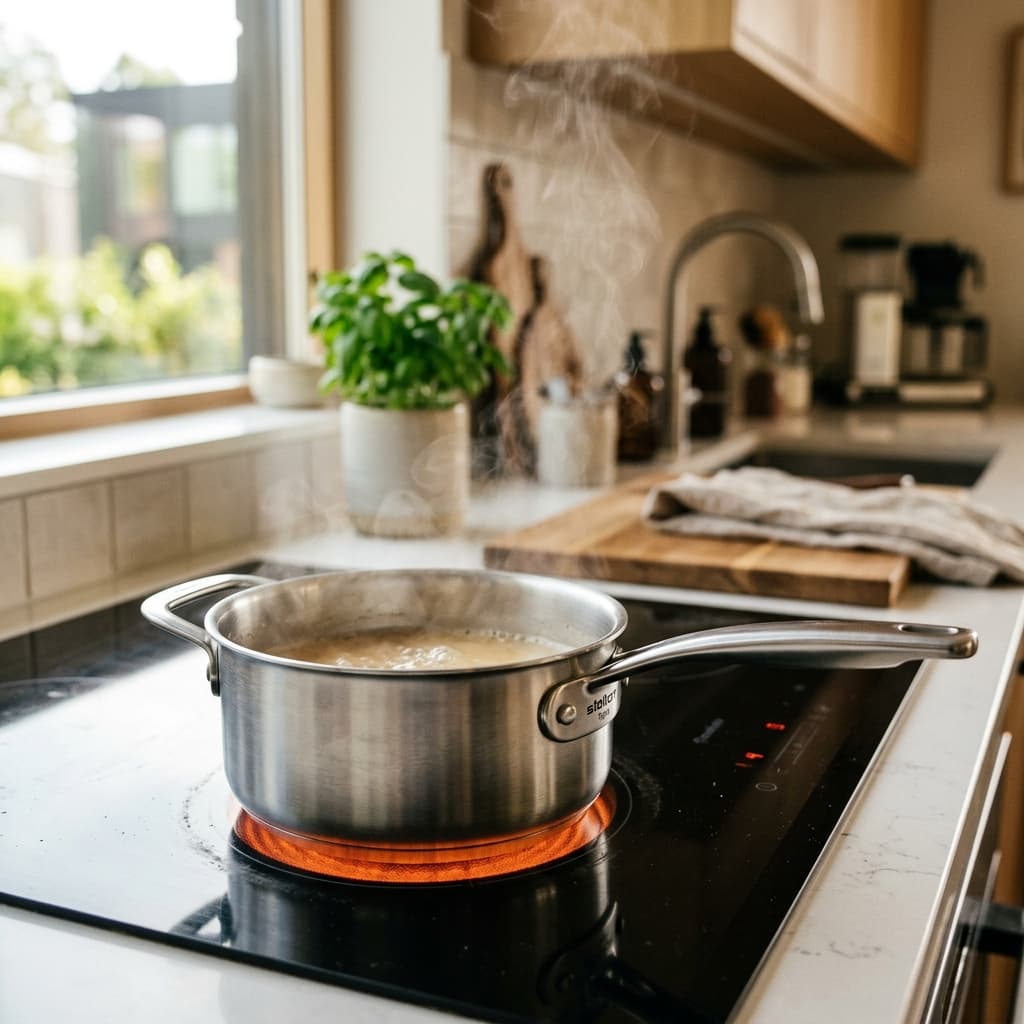
The stainless steel saucepan
Choose a heavy-bottomed (tri-ply) model for even heat distribution. A medium-sized saucepan (2 to 3 quarts) allows you to cook grains, blanch seasonal vegetables, simmer broths, or reduce delicate sauces. Stainless steel is a neutral, inert, and indestructible material that fears neither acidity nor thermal shocks.
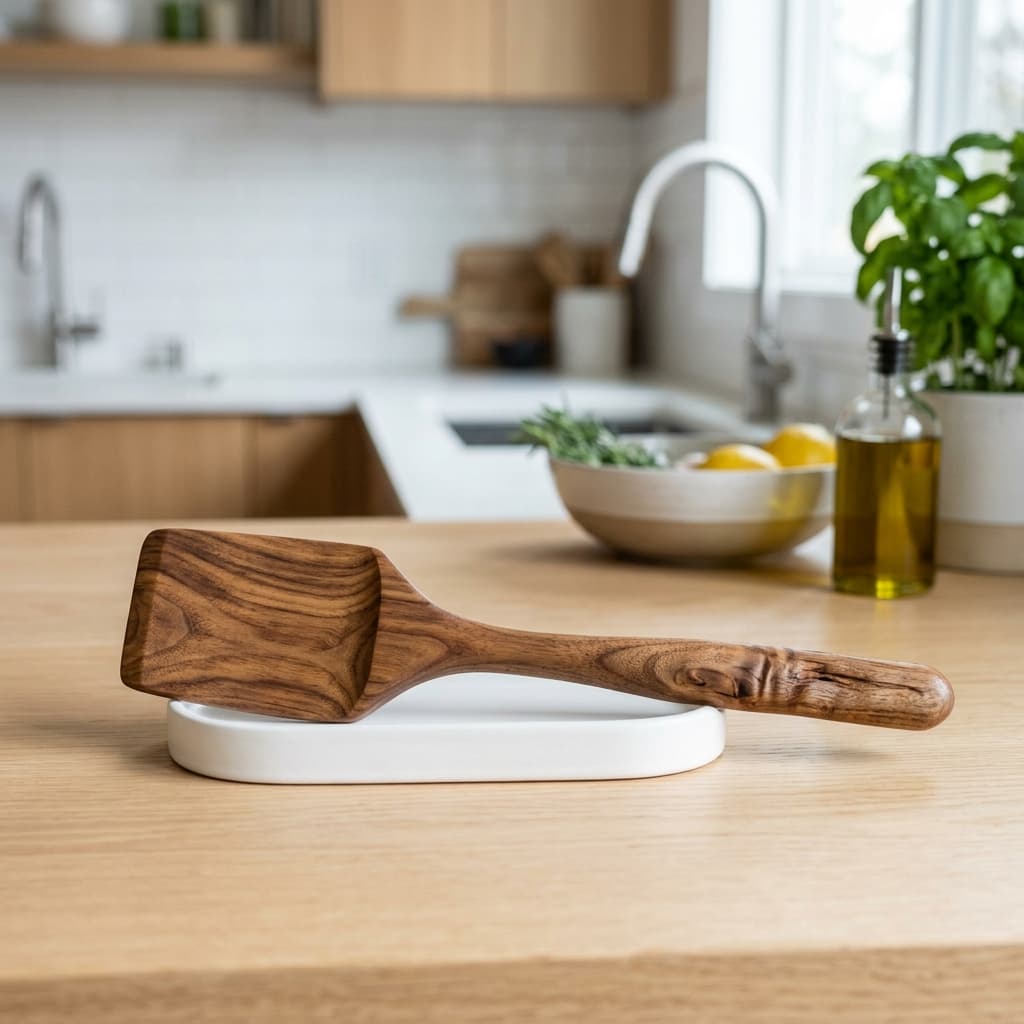
The wooden spatula
Simple, robust, and universal. It won't scratch your cookware, does not conduct heat, and allows you to scrape flavorful browned bits from the bottom of the pan or mix dense preparations. Its angled edge is ideal for stirring gently without crushing ingredients.